Quadrat Sampling: Application with Advantages and Disadvantages

Quadrat sampling is a classic tool for the study of ecology, especially biodiversity. This method allows researchers to directly count organisms in a specific proportion (sample) of the habitat. It is used to estimate population abundance (number), density, frequency and distributions. The quadrat method has been widely used in plant studies. A quadrat is a four-sided … Read more

Purposive Sampling: Definition, application, advantages and disadvantages

purposive sampling

Purposive sampling also known as judgmental, selective, or subjective sampling, reflects a group of sampling techniques that rely on the judgment of the researcher. Unlike random sampling, where researchers give each individual an equal selection chance, purposive sampling involves selecting individuals who can provide valuable insights into the research topic. This sampling procedure is always … Read more

Quota Sampling: Difition, application, advantages and disadvantages

quota sampling

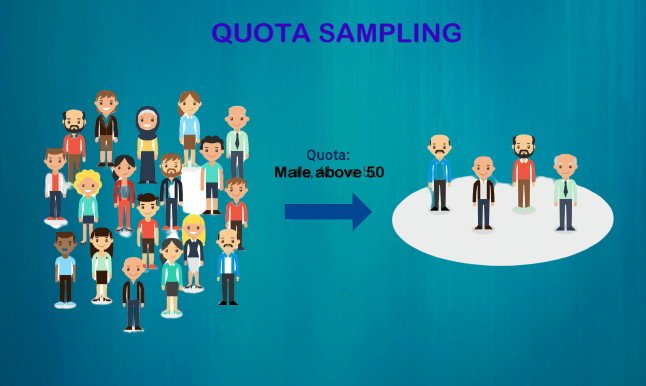
Quota sampling is a non-probability sampling technique where in the assembled sample has the same proportions of individuals as the entire population with respect to known characteristics, traits, or focused phenomenon. This sampling procedure is completely opposite to probability sampling. Researchers then select participants from each quota to ensure representation. Unlike random sampling, quota sampling … Read more

Convenience Sampling: Definition, application, advantages and disadvantages

convenience sampling

Convenience Sampling is a special kind of Non-Probability sampling, where samples are choosen randomly from population and there have also unrestricted term. For example, standing at a mall or a grocery store and asking people to answer questions would be an example of a convenience sample. There are no other criteria to the sampling method. But only … Read more

Snowball sampling: Definition, application , advantages and disadvantages

snowball sampling

Snowball sampling is a non-probability sampling technique used primarily in qualitative and social science research to access populations that are hard to reach or identify through conventional methods. The method begins with a small, initial set of participants known as “seeds,” who meet the study criteria. These seeds then refer or recruit other individuals from … Read more

Cluster sampling: Definition, application, advantages and disadvantages

cluster sampling

Cluster sampling is a valuable and practical probability sampling method widely used in research when dealing with large, dispersed populations. It involves dividing the population into distinct groups, called clusters, then randomly selecting some of these clusters and collecting data from either all or a sample of individuals within the chosen clusters. This approach offers … Read more

Multistage Sampling: Definition, Example with Pros and Cons

Multistage Sampling

In the realm of research, especially when dealing with large and geographically dispersed populations, collecting data can be a logistical and financial nightmare. Imagine trying to interview every single household in a country! This is where sampling comes to the rescue. Instead of surveying the entire population (a census), we select a representative subset (a … Read more

Systematic Sampling: Definition, applications with advantages and disadvantages

systematic random sampling

Systematic sampling is a probability sampling technique where researchers select samples from a larger population at regular, fixed intervals after choosing a random starting point. It ensures even coverage across a population and reduces bias compared to simple random sampling, making it both efficient and reliable for many research and survey contexts. In systematic sampling … Read more

Stratified sampling: Definition, Allocation rules with advantages and disadvantages

stratified sampling

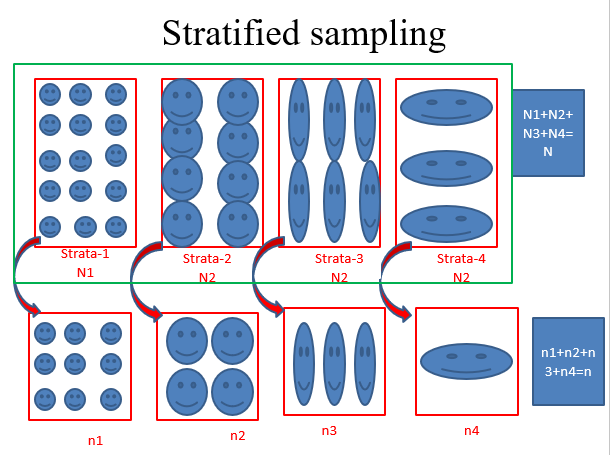
Stratified sampling is a sampling plan in which we divide the population into several non-overlapping strata and select a random sample from each stratum in such a way that units within the strata are homogeneous but between strata they are heterogeneous. Stratum is a group of elements where all the units of elements “within the … Read more

Simple Random Sampling: Applications, Advantages and Disadvantages

simple random sampling

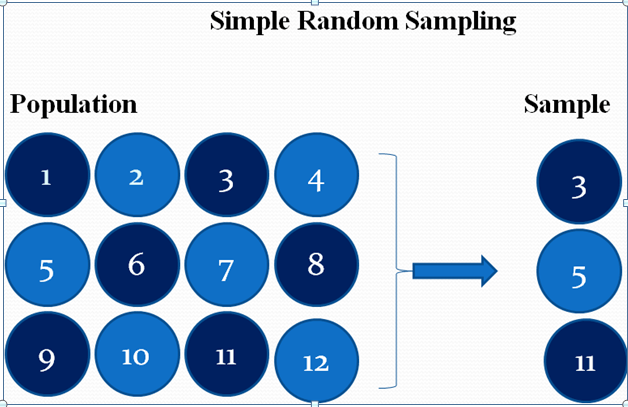
Simple random sampling is the easiest and most popular method of probability sampling. To perform simple random sampling, all a researcher must do is ensure that all members of the population are included in a master list, and that subjects are then selected randomly from this master list. While simple random sampling creates samples that are … Read more

You cannot copy content of this page